
Employment News
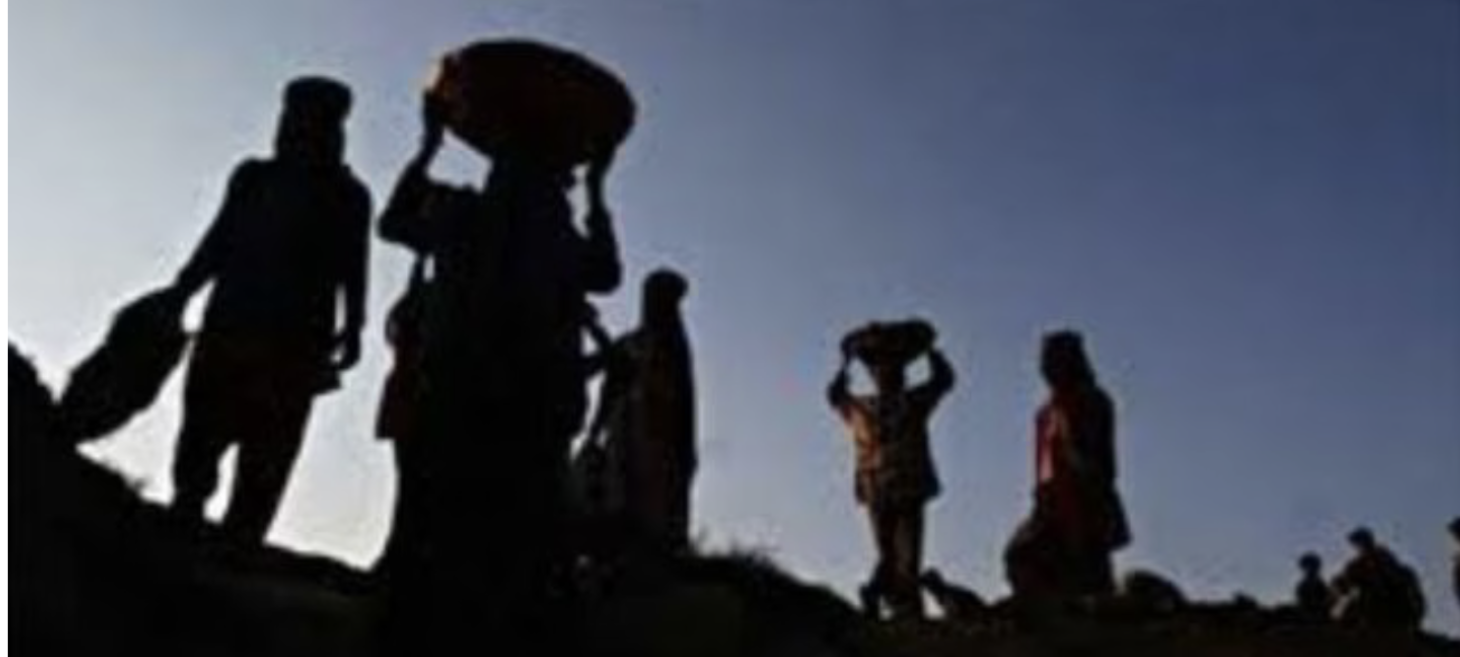
Govt changes NREG terms: States to pay, pause for farm work
IN A major overhaul of the two-decade-old rural job guarantee scheme, the BJP-led NDA government, in its third term, has prepared a Bill that proposes to increase the number of days for which work can be demanded by rural households in a year to 125 from 100 now, and for the first time shifts 40 per cent of the financial burden of the scheme to states.
Change for the worse: On MGNREGA to VB-G RAM G
The move to alter MGNREGS beyond recognition must be dropped. The Viksit Bharat – Guarantee for Rozgar and Ajeevika Mission (Gramin), or VB-G RAM G Bill, tabled in the Lok Sabha on Tuesday to replace the Mahatma Gandhi National Rural Employment Guarantee Act (MGNREGA), deserves to be rejected for more than one reason. What is sought to be changed is not only the nomenclature but also the fundamental character of the existing Scheme (MGNREGS). This marks yet another attempt by the BJP-led government at the Centre to reduce the size of the development space to States.
Govt Vacancies
Government Vacancies Abound
Even as employment seekers despair for government jobs, unfilled vacancies abound at the Centre and state, affecting the quality of governance. Over the past week Amar Ujala reported that the UP. government had invited applications for some 8000 lekhpal revenue officer posts.
And the Times of India reported 5 major recruitment drives for 2900 vacancies for a range of posts across the country including engineering, healthcare, technical, and apprentice -level positions in the Andaman and Nicobar islands, Uttarakhand and elsewhere.
Meanwhile nearly half of the sanctioned positions on pollution control boards and committees across the country remain vacant even as most major cities are reeling under the impact of air pollution according to the answer to a recent question in Parliament. (TOI).
Last week the Deccan Herald reported 4 lakh posts vacant in government departments in Karnataka. More than 10 pc of the posts in Delhi Police are vacant it was reported this week. And at the start of the week the Chief Justice of India was quoted as saying that infrastructural and personnel deficiencies including non-recruitment of judges, was delaying justice in the country.
Government Job : यूपी में लेखपाल के 7994 पदों पर होगी भर्ती, अधीनस्थ सेवा चयन आयोग ने जारी किया विज्ञापन
Labour Reforms
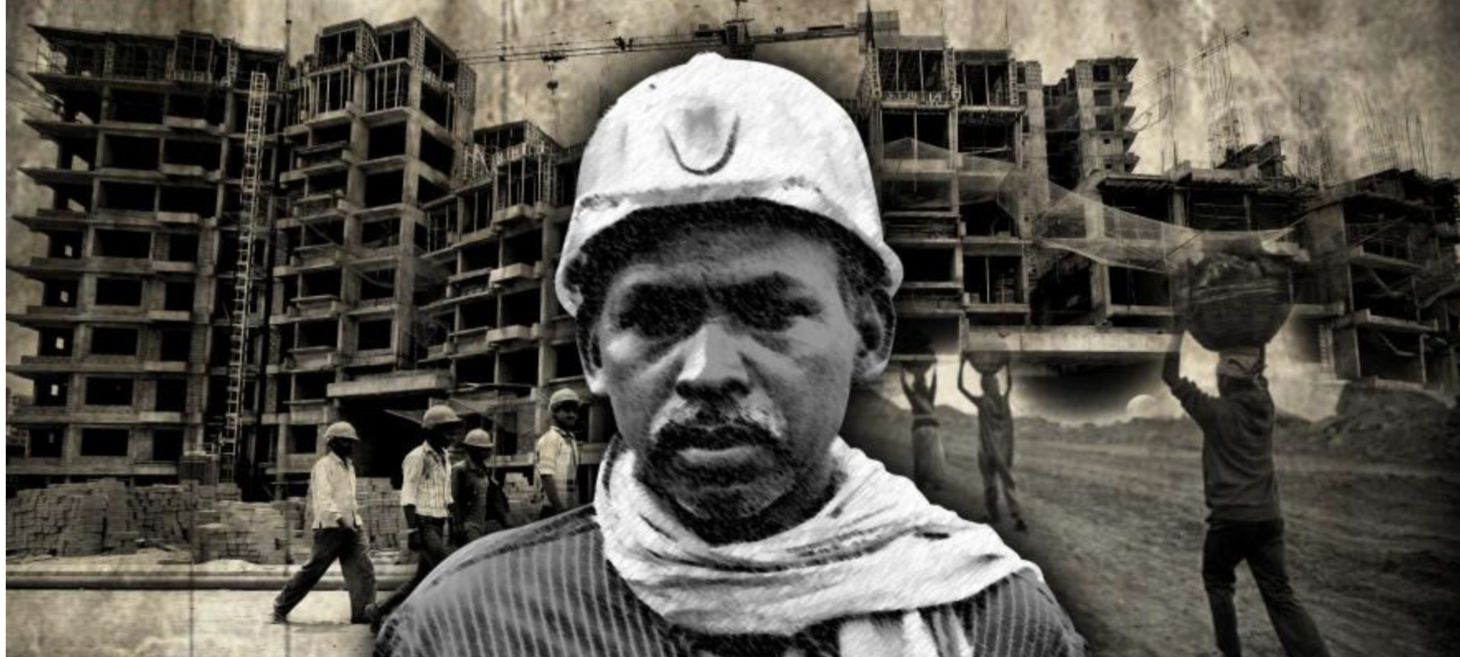
Can these Labour Codes Empower Workers?
Four labour Codes were notified in the last week of November 2025, after having been passed by Parliament in 2019 and 2020 without debate. They concern wages, industrial relations, social security and occupational safety, health and working conditions, and have been heralded by the business and investment community as the biggest reform in a long time. The Codes replace 29 laws that regulated employer-employee relations, and significantly reduce the compliance requirements for a company every year.
The commentary which followed their notification yield the following insights when dissected: the labour codes are transformational, but they don’t favour workers. They represent a serious rollback of workers’ rights and advance long-standing demands of industry on issues such as labour flexibility and minimising statutory obligations. They were passed without a tripartite consultation between workers, employers, and govt representatives as recommended by Convention 144 of the International Labour Organisation (ILO), ratified by India. Tripartite consultations were held once a year at the national level consistently for decades but stopped after 2014. The Indian Labour Conference (ILC), which has met 46 times between 1940 and 2015, has not been convened since then.
Analysts say the Government claims the Codes will extend social security to all workers in the unorganised sector but there are no explicit entitlements or commitments to this end in the Social Security (SS) Code. Section 109 of the SS Code states that the central and state governments “shall frame and notify, from time to time, suitable welfare schemes for unorganised workers”. This also applies to gig and platform workers in Section 114. That is, entitlements have been left to the discretion of successive governments rather than being encoded in the law. (Indian Express, see links below) How such schemes will be funded is spelt out in the case of gig workers but not for all unorganised sector workers. Unorganised workers constitute over 90% of India's workforce.
The second claim is that the Codes will empower workers and lead to an improvement in labour standards. However, the Industrial Relations Code (IRC) makes it more difficult for unions to stay registered and limits the right to strike. Strikes and lockouts are now prohibited in all industrial establishments without a 14-day notice valid for a 60-day period, which applied only to public utilities earlier. A related clause of the IRC in fact risks formalising informality. The new category of fixed-term employment (FTE) allows businesses to hire workers for a limited term who are entitled to the same rights and benefits as permanent workers but cannot claim retrenchment compensation. (IE)
The Occupational Safety, Health, and Working Conditions (OSHWC) Code does not take into consideration the occupational health hazards faced by unorganised sector workers. Domestic, home-based, and agricultural workers have been excluded. There is no mention of safety measures for those in construction work, one of the most hazardous labour sectors. (Times of India). Under the Code on Occupational Safety, Health and Working Conditions, 2020, the definition of a “factory” has been altered, increasing the thresholds of workers to 20 workers for premises where the manufacturing process is carried out using power, and 40 workers for premises where it is carried out without using power. (Newsclick)
The Industrial Relations Code has attracted the strongest opposition because it significantly curtails fundamental labour rights, beginning with a narrower definition of who qualifies as a “worker.” Anyone earning above ₹18,000 or employed in a supervisory role is excluded, meaning key labour protections no longer apply to them. (Newsclick)
Before the codes were notified in November several states went ahead and proactively amended their labour regulations to align with key industry demands. At least 20 states and UTs have increased the threshold for retrenchment without government approval from 100 to 300 workers — a longstanding demand of industry. "The nudge by the Centre to have states amend their existing laws is part of the government's efforts to advance ease of doing business and attract investments and create job opportunities.”(Business Standard).
Enforcing Labour Laws
For the promise of the labour codes to be realised in terms of wage revision and benefits for workers, there has to be enforcement. According to an analysis in The Wire, to understand the ineffectiveness of labour laws it is essential to look beyond their design and examine how their enforcement has changed over time.
The authors study labour inspection data from the Labour Bureau which shows that the average number of labour inspections per 10,000 formal sector employees declined steeply from 510 in 2007 to 34 in 2021. Over the same period, the average number of labour inspectors per 10,000 employees registered a marginal decrease, from 2.5 to 2.4. These patterns indicate a weakening of the labour inspection system, which has serious implications for labour law enforcement. Their findings show that the surge in temporary employment within the formal sector, from 20% in 1999–2000 to 40.7% in 2022–23, has also eroded the effectiveness of labour laws. However, the share of temporary workers in stricter labour law states was 5% lower than in flexible states.
Since 2014, India has adopted a risk-based randomised labour inspection system, which aims to enhance ease of doing business and compliance with labour laws. establishments are now randomly selected for inspections. However, the randomisation is performed after classification of establishments based on risk-level and history of violations. Enterprises are selected from high-risk groups for labour inspections. The new labour code on Occupational Safety, introduced in 2019-2020, has formalised this approach. In principle, the randomised labour inspection system can bring transparency and reduce corruption. However, when the randomisation is accompanied by a significant reduction in the number of inspections, the probability of an enterprise to be inspected falls. This can undermine the deterrence effect of labour inspection system, thereby weakening the enforcement of laws.
The marginalised bear the brunt of weakened enforcement. Therefore, policy makers should raise the intensity of labour inspections and strengthen the capacity of enforcement agencies, alongside promoting formal employment. This combination can ensure effective implementation of labour laws.
Tailpiece

Why China's graduates are choosing government jobs over private firms
China’s slowing economy is changing how young people think about their careers. With private companies hiring less, many educated graduates are now choosing government roles for safety and stability. This shift has led to record numbers applying for civil service positions, even as competition for these jobs becomes tougher than ever, CNBC reported.