Migrant Realities

TMC, Chhattisgarh cops trade charges over assault of migrant workers
KOLKATA/RAIPUR : An incident of assault on migrant workers from West Bengal has come to light in BJP-ruled Chhattisgarh, prompting the Trinamool Congress to intensify its protest against what it calls the regular targeting of Bengali-speaking labourers on suspicion of being Bangladeshi nationals. The state has set up a toll-free number to report suspected illegal immigrants. Similar attacks on migrant workers from Bengal have been reported in Odisha. On Sunday, a migrant labourer from Murshidabad was allegedly assaulted in Sambalpur, leaving one of his arms fractured.
In the Courts
SC nudges Centre to revisit EPF wage cap of ₹15,000, directed to take decision on the matter in 4 months
The Supreme Court has directed the government and the Employees Provident Fund Organisation to examine the ₹15,000 basic salary ceiling for EPF enrolment. A social activist petitioned for a mandatory annual revision linked to economic indicators. The court asked the petitioner to submit a representation for a decision within four months.

Workers Hired Through Contractors Can't Claim Equal Status As Regular Employees : Supreme Court
The Supreme Court held that contractual workers engaged through third-party service providers are not entitled to equivalent employment benefits as regular employees, observing that such parity would undermine the foundational principles of public recruitment and transparent hiring processes.
Women in the Workforce

Salary gap persists, fewer women take up executive roles, says study
The world remains deeply unequal when it comes to gender parity. Women earn 25–30 per cent less than their male counterparts for similar roles, with the gap widening to as much as 28 per cent in leadership positions. In Corporate India, women account for about 31 per cent of entry-level roles, but their presence drops sharply to 17 per cent at the executive level and 20 per cent on company boards, largely due to mandatory requirements, a study released this week shows.
Women Apprentices Surge 58% in 3 Years to 197,000: TeamLease Degree Apprenticeship Report
The report shows that women apprentices have increased from 124,000 in 2021–22 to 196,914 in 2023–24. This steady growth highlights how structured apprenticeship programmes are bridging gender gaps, expanding access to skills, and driving inclusive workforce participation across India.
Profiles

A Haryana constable teaches geyser safety in his police uniform. He got 4.9 million views
In a video that has gone viral, the Haryana Police constable wears his full uniform, holds an electric tester, and explains how a faulty electric water heater can kill. It has 4.9 million views and likes on his Instagram handle, vardiwala007. At a time when police officers and civil servants are still dancing around how to navigate social media protocols, Yadav’s online avatar is an unusual hit.
The Gig Economy
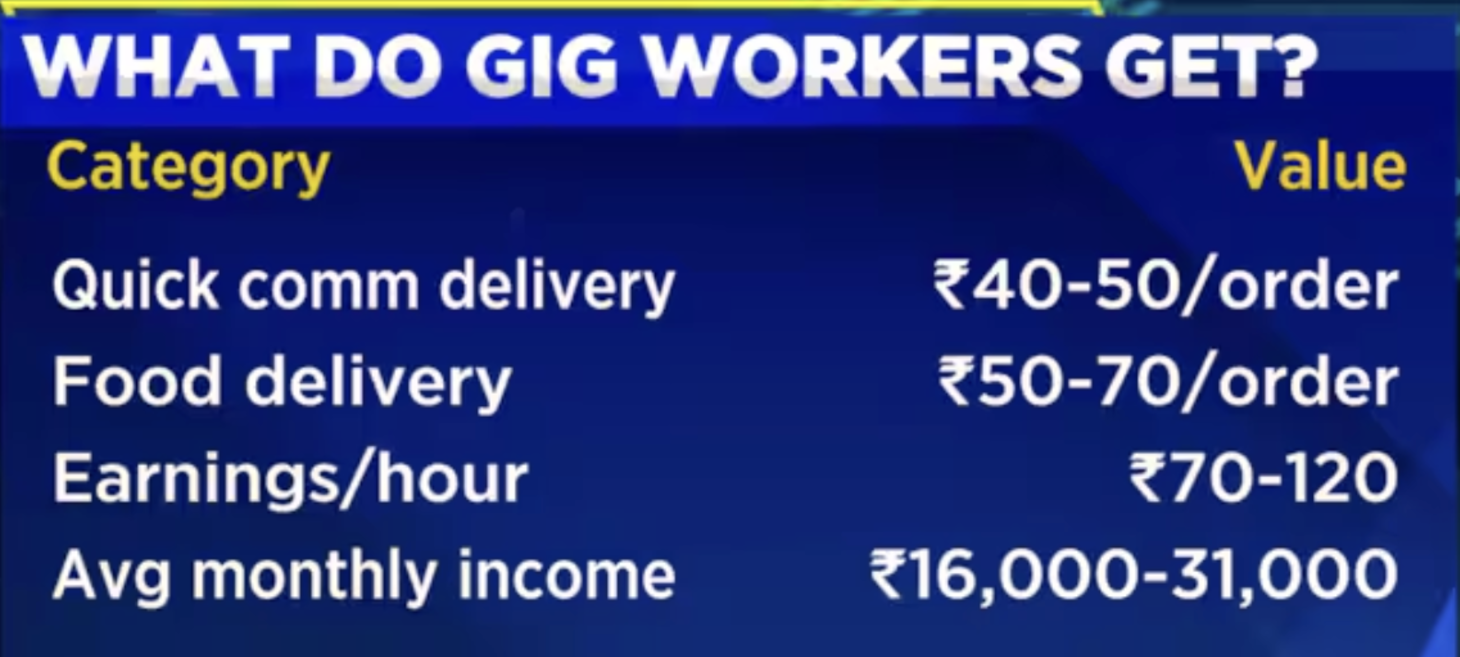
Quick commerce’s next hurdle is gig worker security, say industry executives
VIDEO: India’s quick commerce boom faces a social security challenge as gig work scales rapidly, with TeamLease CFO Ramani Dathi and Updater Services COO Saravanan CR highlighting the trade-offs between worker benefits, platform costs, and flexibility.
Gig firms need to contribute 5% of workers’ wages for social security by June 30, draft rules say
Firms in India’s gig economy will have to contribute up to 5% of the wages payable to workers as contribution towards a National Social Security Fund and they will have to pay provisional contribution, as assessed, by June 30
Labour Reforms
New labour codes may hit MSMEs harder than large firms, say experts
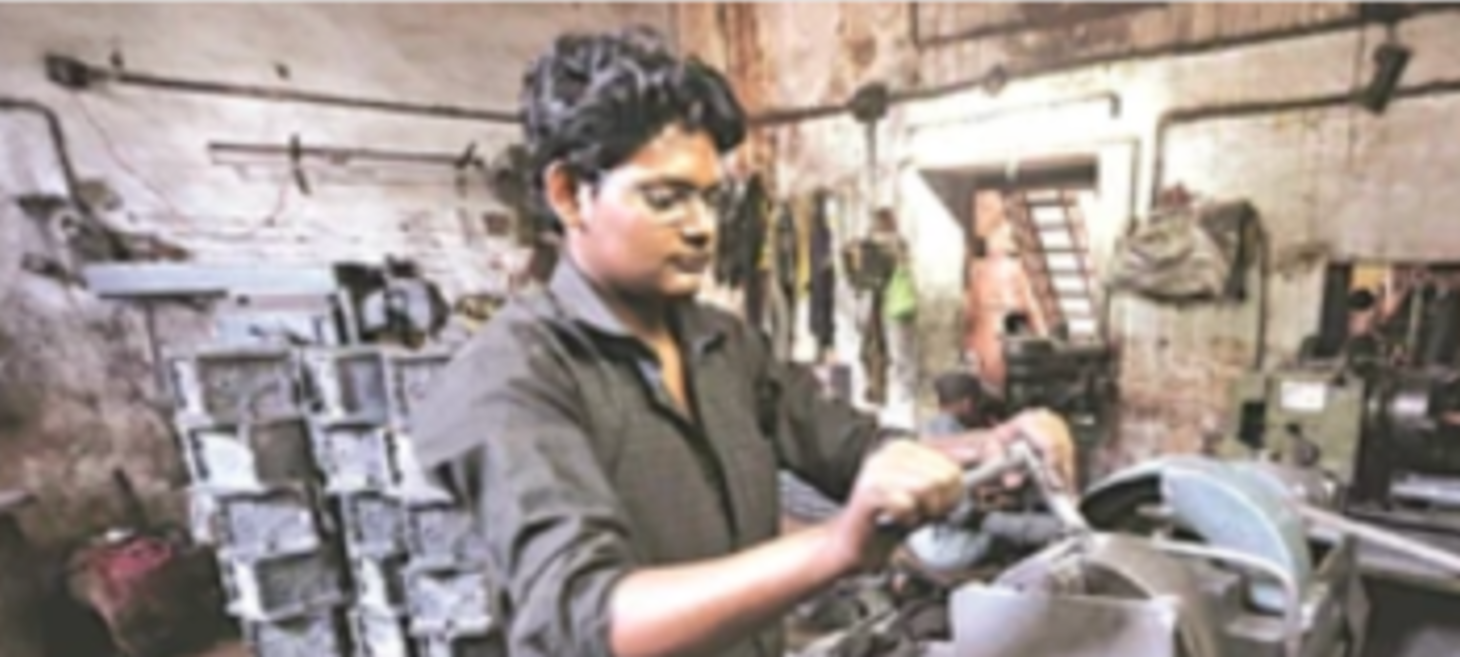
Higher compliance costs under the four new labour codes may disproportionately impact micro, small, and medium enterprises (MSMEs) more than large companies as they will require human resource (HR) overhauls and face increased wage payouts, said industry bodies and HR firms.
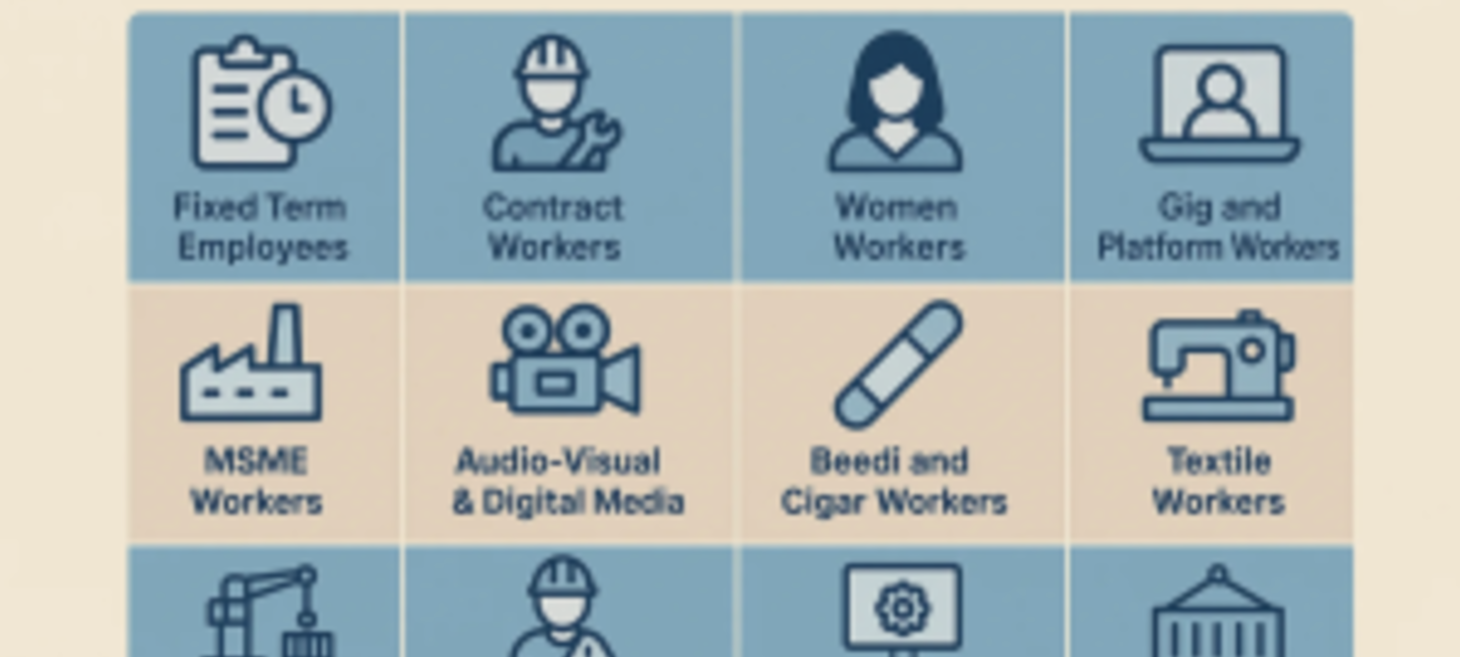
India’s New Labour Codes: Implications for Workers and Businesses
Gig and platform workers are not the only category of informal workers covered by the labour codes. Protections and benefits are also mandated in the Codes for the following sectors of informal employment and all contract workers: women workers, textile workers, beedi and cigar workers, mine and hazardous industry workers, dock workers, and export sector workers, among others.
Tailpiece
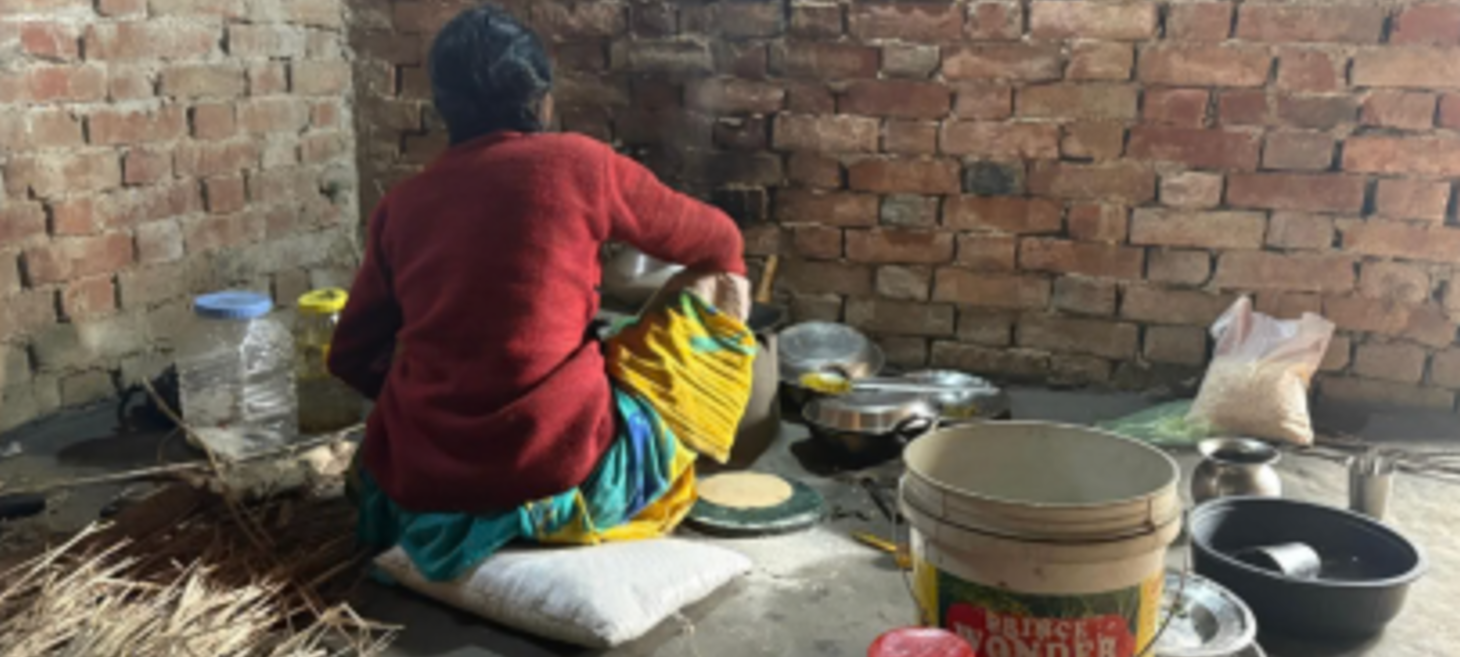
Inside Oscar-nominated Homebound boys’ village in UP—a heavy burden of memory
On screen, Chandan and Shohaib are given ambition and possibility — young men preparing for government jobs, dreaming of becoming sipahi. However, the reality was a bit different.
Garment Workers
SECTOR REVIEW 2025---GARMENT AND TEXTILE WORKERS
The textile sector is India’s second-largest employment generator after agriculture with over 45 million people engaged directly, many of them women and rural workers. Nearly 80% of the industry operates through micro, small and medium enterprise clusters which are export dependent. A sector characterised by employment opportunity for labour from across the country despite exploitative terms and poor working conditions, discovered its precarity in 2025 with the 50 per cent US tariffs imposed in August. These impacted the Indian garment industry severely, resulting in widespread job losses, reduced wages, a migrant worker exodus and units struggling to survive.
Yet the Ministry of Textiles announced in December that textile and apparel exports had registered 5 per cent growth in 2025, reaching USD 37.8 billion, suggesting a marginal recovery from the tariffs shock.
As the Labour Codes were notified in November 2025 the government’s publicity outreach dwelt on some of their sectoral implications. It asserted that with the four labour codes coming into effect garment and textile workers would receive stronger protections and improved welfare benefits. It said the Codes also provided for double wages for overtime, “strengthening financial security for hardworking textile employees.” A significant omission in the rights conferred by the Indian Labour Codes is what is known in garment supply chains as Freedom of Association. This means that workers can form and join trade unions of their choosing, and equally, employers can form or join employers’ organisations. This right enables workers and employers to be formally and collectively represented in negotiations to arrive at solutions to improve working conditions.
ILO Convention 87 protects the right of workers to form and join the trade union of their choosing. A government focused on ease of doing business is silent on the right to join unions. But without unionisation can the provisions of the labour codes be secured by informal workers? Will there ever be enough effective government enforcement to ensure them?
Feedback on how suppliers in India’s garment sector operate comes from international monitors of various kinds. In November 2025 Amnesty International published two reports on the issue. Drawing on nearly 90 interviews across 20 factories in India, Bangladesh, Pakistan, and Sri Lanka, the reports detail "widespread violations of freedom of association in the garment industry," including infringements of workers' rights and acts of harassment and violence by employers. It said workers are systematically deprived of their rights through informal and precarious contracts.
The Labour Codes cited say nothing about ensuring proper working conditions, which are a major issue in the textile sector. In October 2025 a media report here described how extreme heat was stressing garment factories, putting workers at risk. For instance in Tamil Nadu, one of the country’s largest garment-export hubs, workers have reported frequent fainting spells, rashes and dehydration when indoor temperatures reach 35–40 °C. Whereas heat stress needs to be treated as an urgent issue and as a part of labour rights and integrated into climate adaptation plans, it is not clear that policy frameworks have begun to incorporate heat-risk mitigation in workplaces, especially in the textile and garment sectors. This would entail building-design improvements (like white reflective roofs), and ensuring that accessible hydration, and fan-based cooling are scalable and cost-effective.
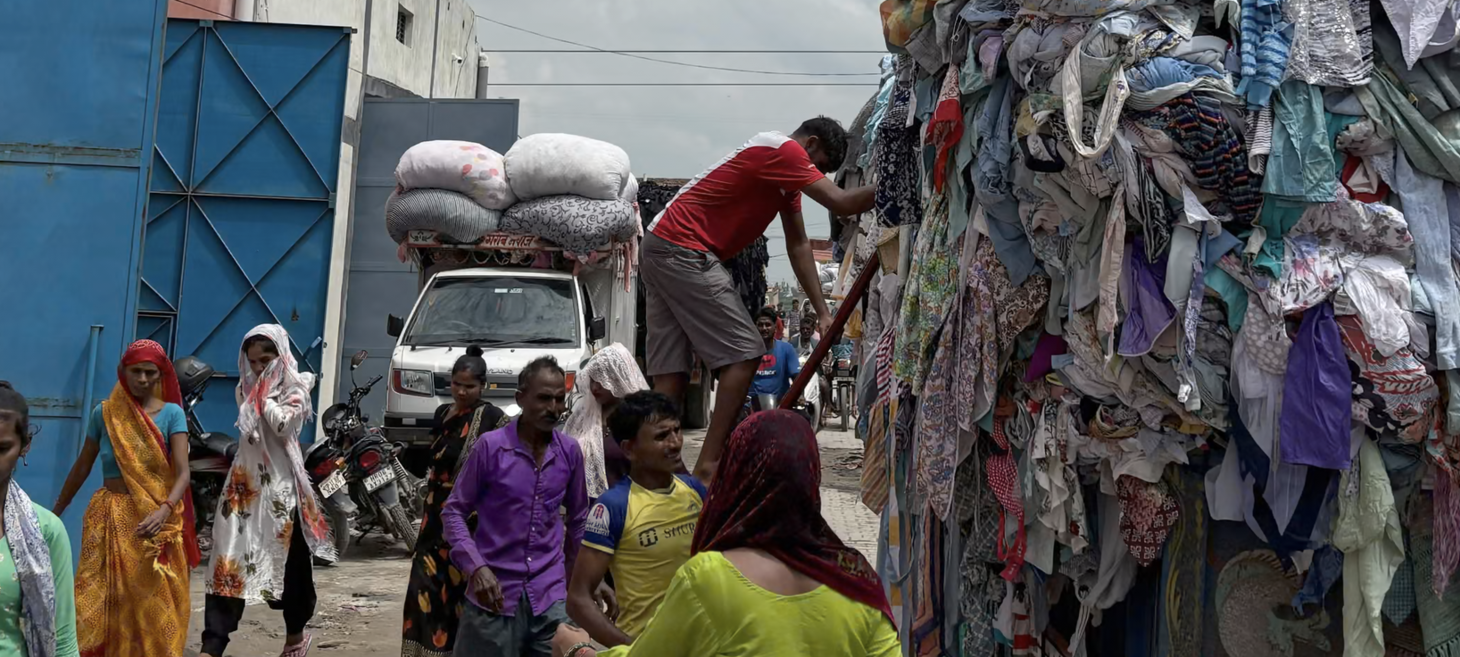
Garment production is only part of the story in the textile industry. More horrific are the working conditions in the textile waste recycling units described in a report in The Guardian called “Fast-fashion recycling: how ‘the castoff capital of the world’ is making Indian factory workers sick’. It said reports of lung disease, skin conditions and even cancer were rising in Panipat, which recycles 1 million tonnes of textile waste a year.
Shipments of discarded clothing from Europe, North America and East Asia are shredded here by thousands of workers, spun back into yarn and woven into rugs, throws, sheets and cushions destined for international retailers. The story describes how feeding scraps of cloth into roaring machines release clouds of lint which the workers inhale.
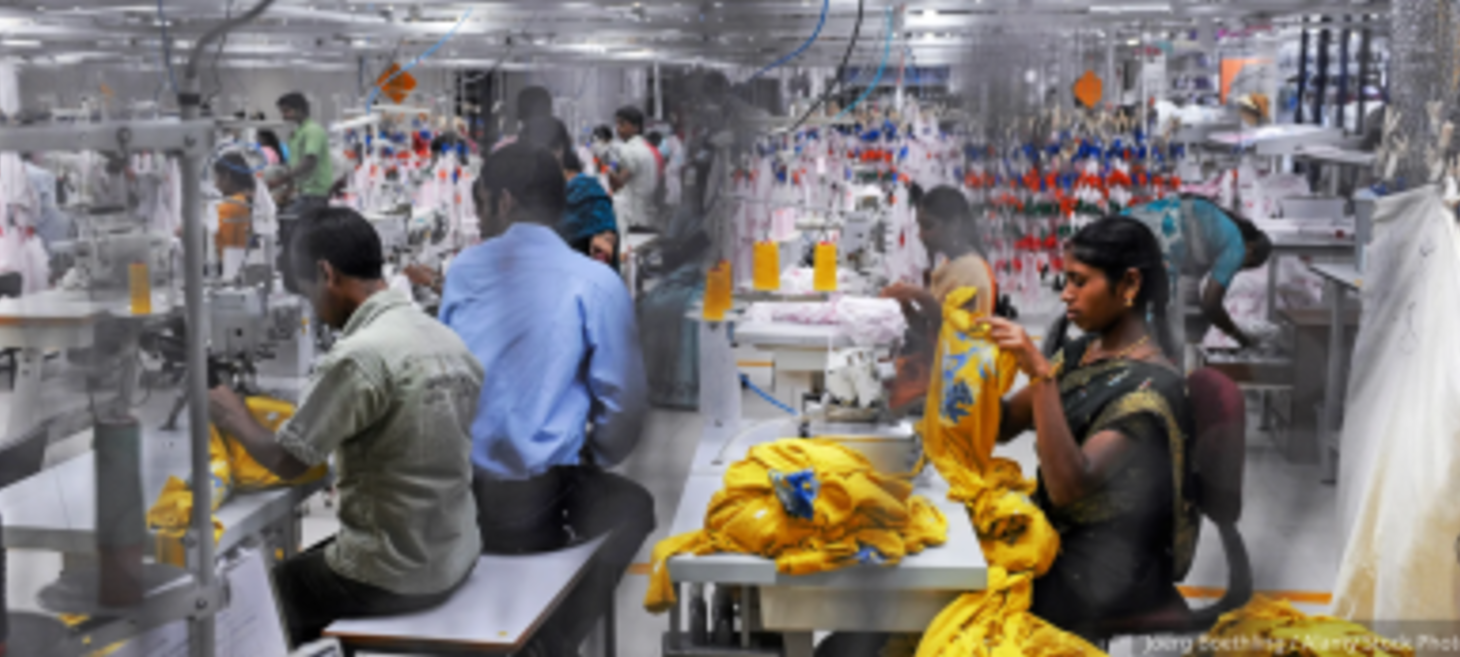
India: Garment workers facing furloughs, reduced shifts, cut pay & overtime pay freeze since 50% US tariff
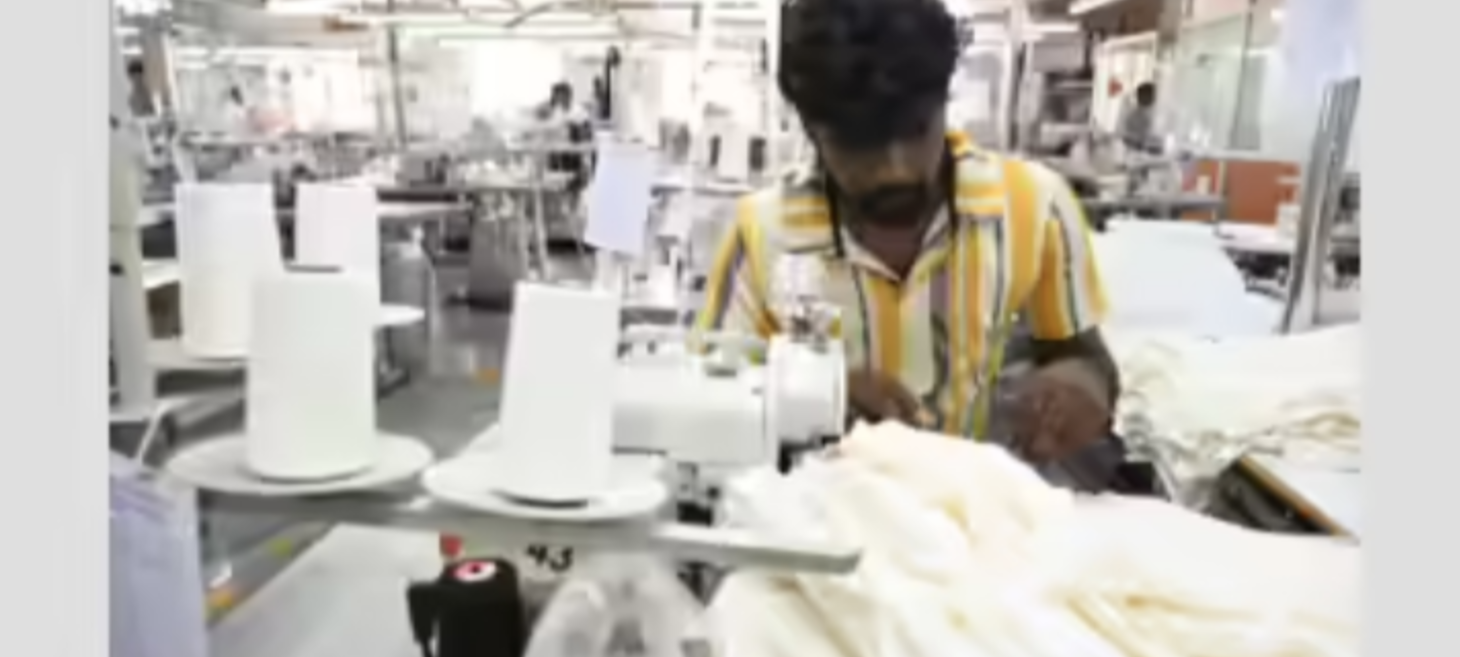
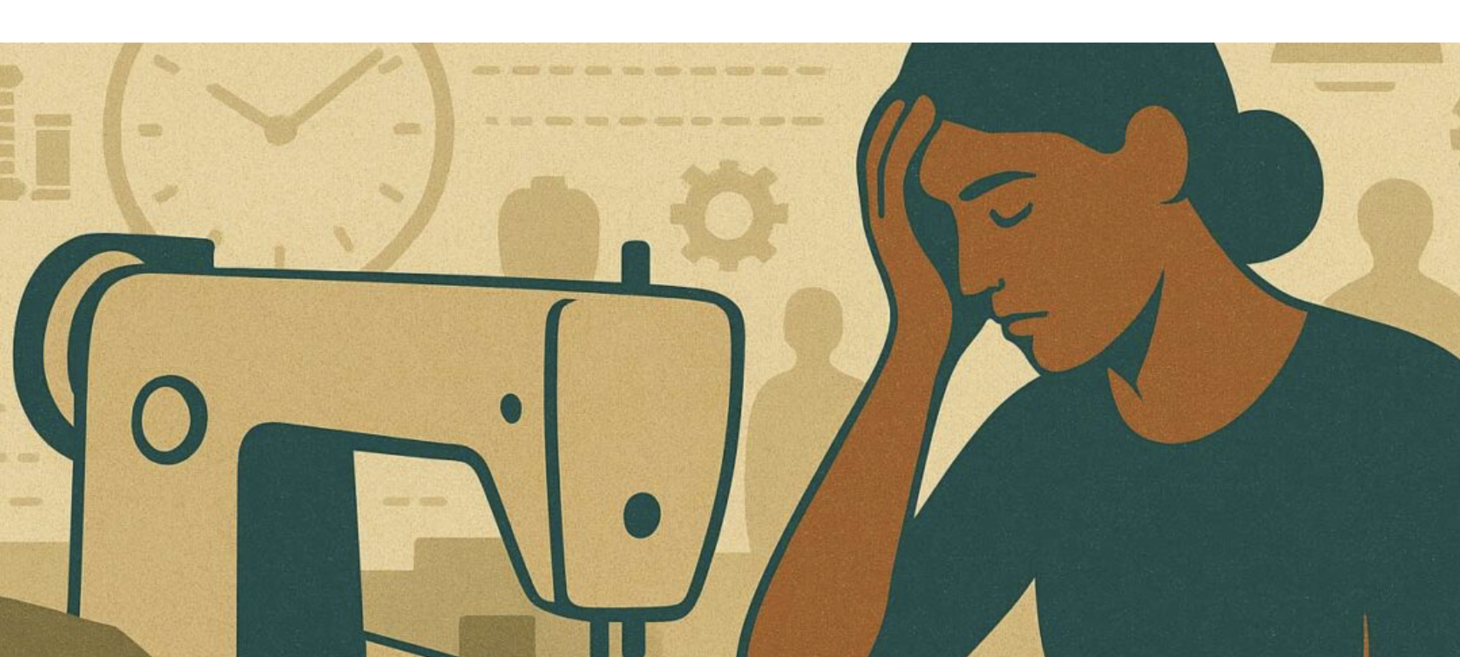
‘I Am Not A Machine’
Ritu’s Journey from Bihar to Bengaluru’s Garment Lines Shows How Long Shifts Push Women to Consider Leaving the City for a Better Life. “I wake up at 5 am, I work until 11 pm. There’s no time to rest,” she says. “If I feel sleepy, they tell me: ‘Don’t come if you don’t want to work’. But I have to work.”
The price of fast fashion is not pretty
For Reema, the true cost of fast fashion is paid in sweat, suffering and enduring unsafe conditions, as she works long hours for minimal pay inside a cramped garment factory in Noida, Uttar Pradesh. She receives her wages in cash, and she does not receive a paper or electronic salary slip or record, making it difficult for her to raise any complaints if she feels she has been underpaid. There is no written contract of employment.
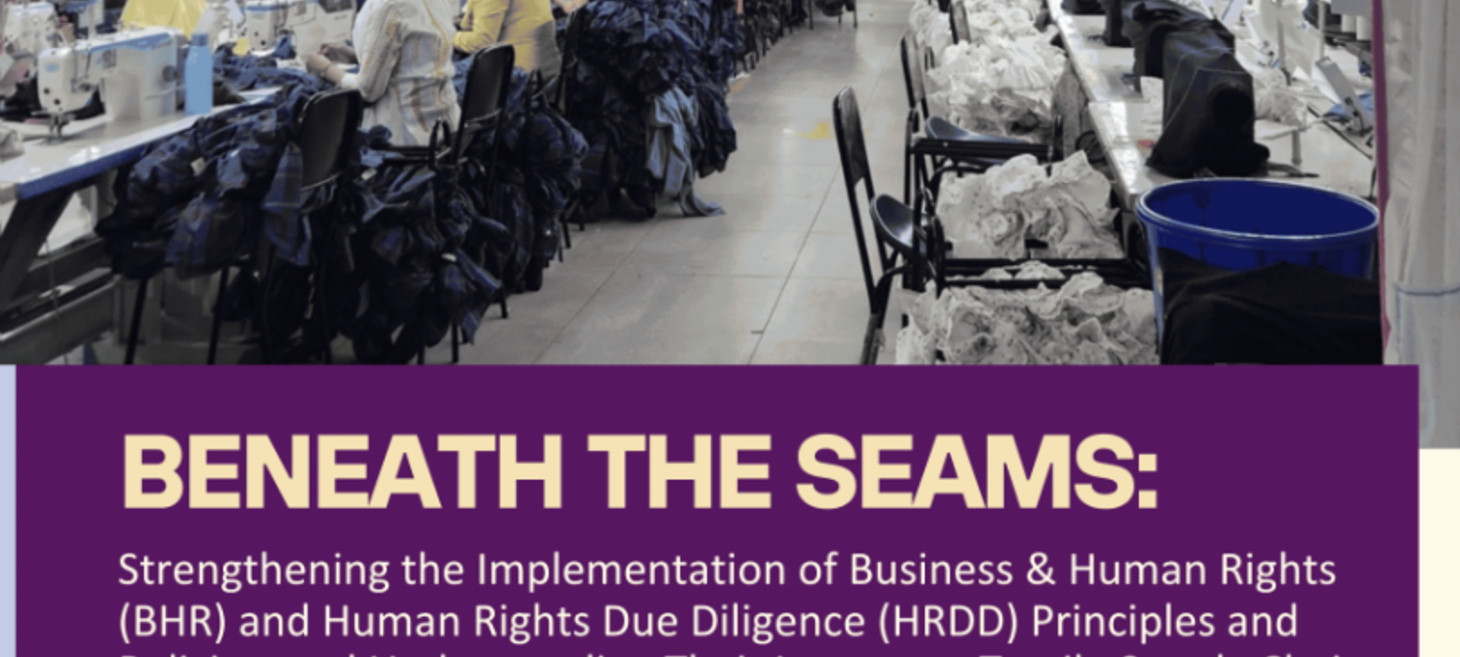
Beneath the Seams: Strengthening Human Rights Due Diligence and its impact on textile workers, farmers and communities in India
Labour Codes: Transforming India’s Textile Sector with Simplified Compliance and Stronger Worker Welfare
Extreme heat stressing garment factories, putting workers at risk
For India, the needs are clear: policy frameworks must incorporate heat-risk mitigation in workplaces, especially in the textile and garment sectors.