
In the Courts

Bombay High Court Proposes Stopping Salaries Of BMC, NMMC Commissioners For Their Failure To Contain Air Pollution Levels
The Bombay High Court on Friday criticised the Brihanmumbai Municipal Corporation (BMC) and the Navi Mumbai Municipal Corporation (NMMC) for the failure to bring down the rising levels of air pollution in Mumbai and neighbouring areas and therefore indicated that it may on the next date, pass 'coercive' orders of stopping the salaries of the Commissioners of both Mumbai and Navi Mumbai.
Caste in Employment
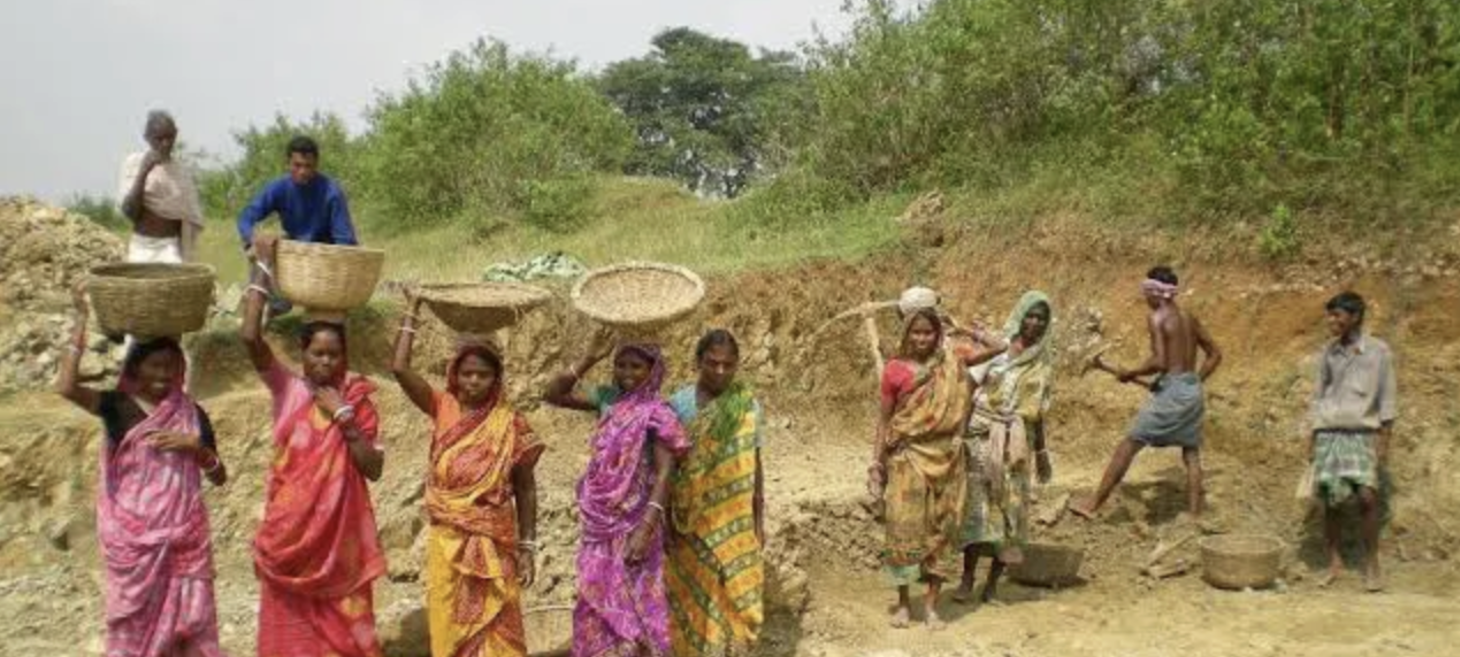
MGNREGA: How caste and power hollowed out India’s largest welfare law
The sudden dismantling of MGNREGA once again exposes the limits of progressive legislation in the absence of transformation of a casteist, semi-feudal rural society This article undertakes a brief review of the implementation experience of the Act, attempts at organising workers, and the necessity of a social transformation that must go hand in hand with progressive legislation. It critiques the liberal propensity to legislate poverty alleviation and rights without any attempt at grassroots transformation of a casteist, semi-feudal social base.
AI and Jobs

What Davos revealed about work: Five uncomfortable truths
Harvard economist Gita Gopinath delivered Davos’s most uncomfortable statistic: since the 1980s, only 30 per cent of India’s growth has come from labour. The rest? Capital.
For a country that spent decades celebrating its demographic dividend, this represents fundamental failure. India hasn’t chosen to be capital-intensive—regulatory friction forced it. Companies opted for machines rather than navigate labour laws.
Entry-level jobs are vanishing. Since January 2024, entry-level job postings have fallen nearly 29 per cent globally. Youth unemployment in the US hit 10.8 per cent—double the overall rate. India: 17 per cent. China: 16.5 per cent. Morocco: 36 per cent. In the UK, 1.2 million graduates competed for 17,000 entry-level positions.
Corporate response reveals the contradiction: 41 per cent plan workforce reductions in AI-exposed roles. Seventy per cent plan to hire for AI skills. Neither helps graduates who can’t get first jobs because entry-level roles are automated whilst AI positions require experience they can’t gain.
Gen Z’s pragmatic response: 37 per cent now pursue blue-collar work. When white-collar entry paths close, you find alternatives.
CEOs think AI is speeding up work, workers don’t agree
How much time workers say the technology saves them on the job is vastly different from what executives report.
Wage Revision
Government approves wage revision of PSU general insurers, NABARD, RBI employees, pensioners
The central government has approved wage revisions for PSU General Insurance companies and the National Bank for Agriculture and Rural Development (NABARD), as well as a pension revision for retirees of the Reserve Bank of India (RBI) and NABARD. A total of 46,322 employees, 23,570 pensioners and 23,260 family pensioners will benefit from the wage revision, the Finance Ministry said. Arrears for all categories will be calculated from 2022.
Labour Reforms
New System to Weaken Labour Laws? Inspector-Facilitator Rolled in One
New Delhi: Historically, the “labour inspector” was a figure of significant authority, empowered to enter workplaces and ensure compliance with the law. However, the Draft Code on Social Security (Central) Rules, 2025, signals a potential retirement of this role. In its place, Rule 41 introduces the “inspector-cum-facilitator”. This semantic shift represents a notable pivot in the philosophy of enforcement, moving from a regime of deterrence to one of “regulatory facilitation”.
Farm News
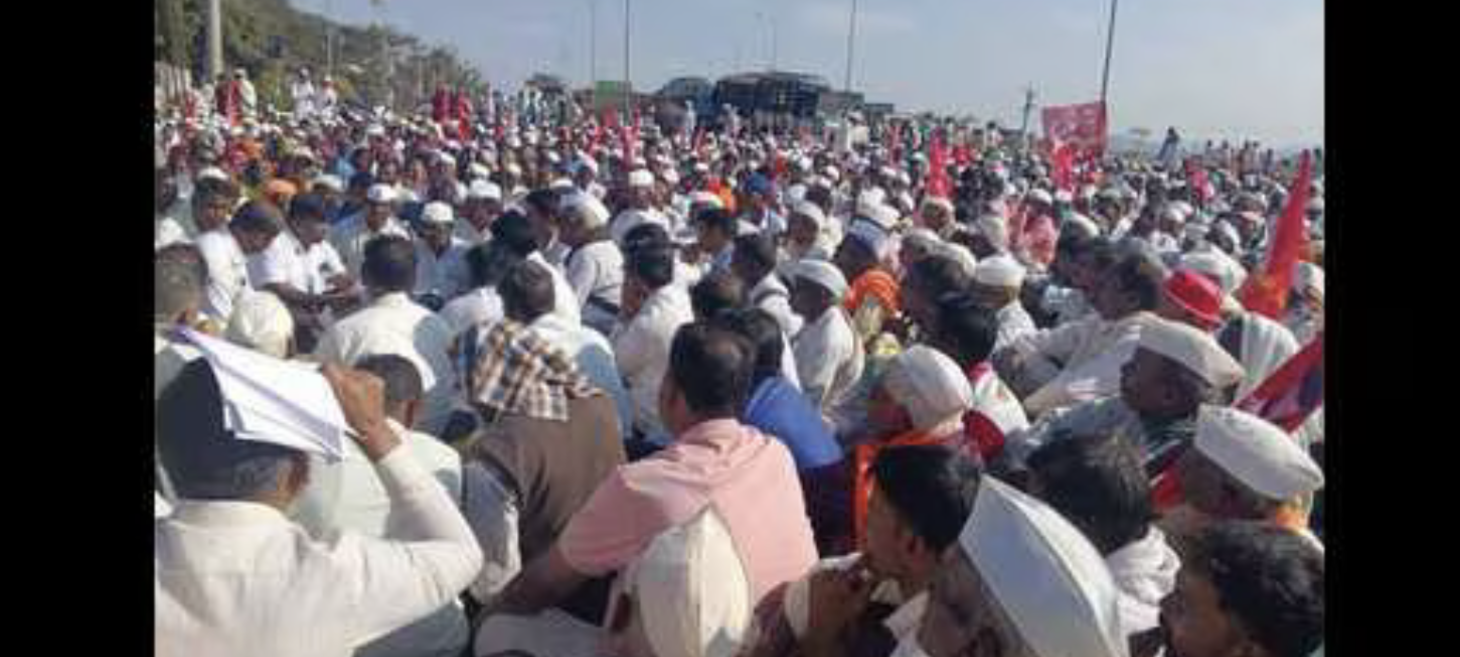
Massive farmers’ march begins from Nashik, to reach Mumbai by Feb 2
Around 40,000 farmers launched a ‘ long march’ from Nashik on Sunday, demanding implementation of long-pending assurances under the Forest Rights Act (FRA) and The Provisions of the Panchayats (Extension to the Scheduled Areas) Act, 1996 (PESA), completion of irrigation projects, and filling of thousands of vacant posts in Zilla Parishad schools. The march, led by the Communist Party of India (Marxist) and the All India Kisan Sabha (AIKS), also targets what organisers describe as corporate-friendly policies of the Bharatiya Janata Party.
Travails of Teachers
SECTOR REVIEW 2025---Schoolteachers
For much of the past year teachers in this country were a beleaguered lot, making news for the wrong reasons. They were on the streets fighting for basic entitlements including regularisation of their jobs. They found themselves at the receiving end of court decisions that either took away or restored their jobs. And then during the Election Commission’s Special Intensive Revision of electoral rolls schoolteachers were co-opted for duties so onerous that some took their own lives. Suicides of booth level officers in the last two months of the year made constant headlines.
Meanwhile reports from the ground were showing dire neglect of classroom teaching thanks to the diversion of teachers for the SIR.
The year saw teachers’ protests continuing from 2024 in Punjab, Bihar, UP, Chhattisgarh and Tamil Nadu. The demands range from cancellation of the competency test and direct regularisation (Bihar), reinstatement in primary school jobs after termination following a High Court ruling (Chhattisgarh), job reservation and pay hikes (Punjab and Tamil Nadu) and fair reservation implementation (Uttar Pradesh). Part time government school teachers in Tamil Nadu have also been on strike since 2024 for permanent jobs. In Hyderabad more than a 1000 teachers hit the streets in August 2025 to press for sanctioning of District Educational Officer (DEO) posts and the prompt release of pending teachers’ bills.
Recruited teachers lost their jobs in December 2024 in Chhattisgarh because a Supreme Court ruling changed the qualifications needed. By mid 2025 the state government was moving to reinstate these teachers via vacancies. And in December 2025 primary school teachers in West Bengal found their jobs restored by a division bench of the Calcutta High Court. It ruled against scrapping the recruitment of 32,000 teachers for state-run primary schools, setting aside an order of HC judge-turned-BJP MP Abhijit Ganguly on the grounds that the jobs were "actually sold”. The High Court said no evidence of systemic corruption had been found by the CBI.
Data published in the course of the year offered a profile of this sector. India had 10.12 million teachers in 2024-25, with most of them being in higher secondary schools. The number of Indian teachers who have at least a bachelor's degree is now 87 per cent. Forty six per cent had postgraduate or higher degrees. The average number of teachers per school increased from six in 2022-23 to seven in 2024-25. The number of schools with a single teacher declined 12% to 104,125, while teachers working in schools with zero enrolments fell 23% to 20,817 during the same period.
Meanwhile it has been announced this month that government school teachers’ promotions will now be linked to classroom performance and demonstrated competencies rather than seniority alone. The National Council for Teacher Education is rolling out the National Professional Standards for Teachers (NPST).
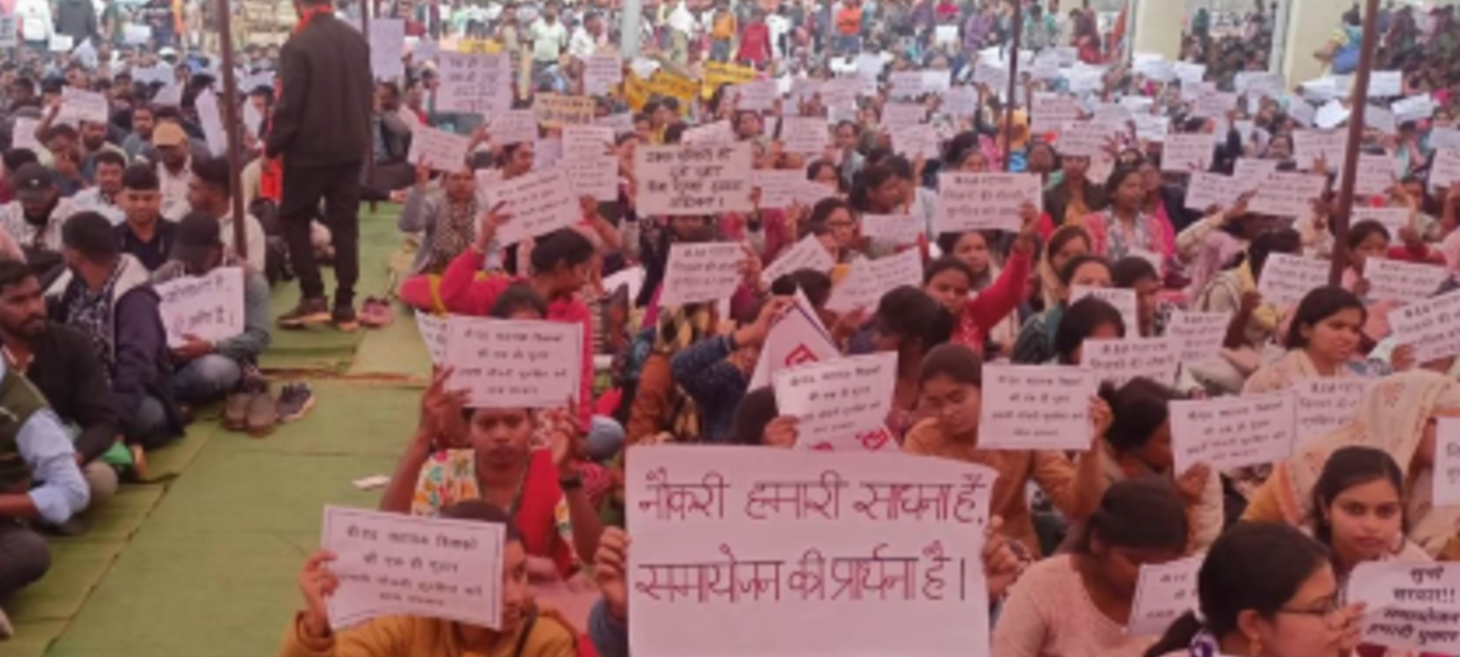
A teachers’ crisis is brewing across India—Chhattisgarh to UP, Punjab, Tamil Nadu
Recruitment scandals, new competency exams, ad-hocism, and low salaries—India's schoolteachers are fighting on the streets, in courts, and even online.
‘Innovating at pleasure’: Calcutta HC quashes order to scrap 32,000 teacher appointments, court says only 360 cases had irregularities
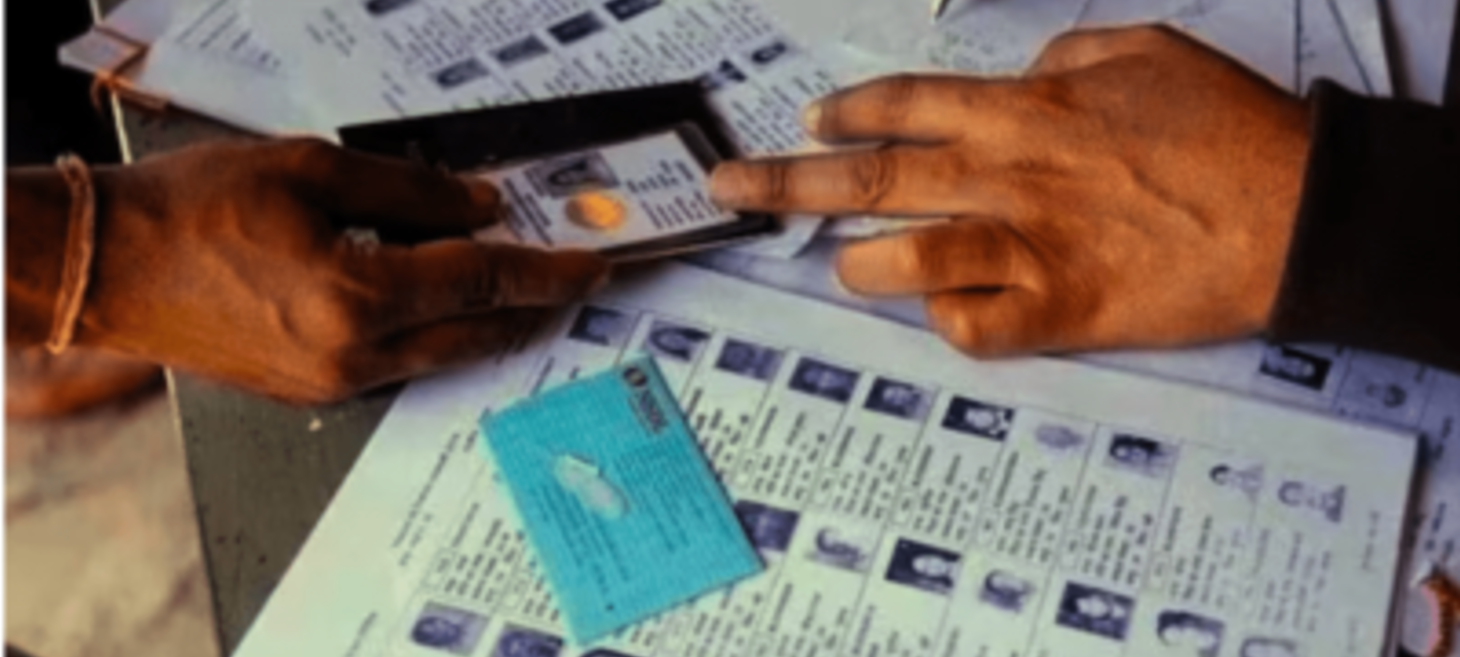
Pulled out of classrooms, pushed into bureaucracy: How SIR is breaking India’s teachers and anganwadi workers
Kusum's pre-board students are weeks away from a crucial exam, yet she hasn’t taught a single lesson in nearly a month. Her school, as she said, has lost six staff members, including subject teachers for mathematics and physics, to Special Intensive Revision (SIR) duties.
Unused Welfare Funds

Hands that build Delhi brick by brick out of welfare framework
New Delhi: On paper, the welfare framework for Delhi's construction workers promises them wide-ranging support in almost all spheres of life: from maternity care, pension, housing, healthcare, education and even free daily commute in govt. buses. However, many of the intended beneficiaries had a blank look when TOI asked them about the schemes. For many of them, being aware of the eligibility conditions come later; the first barrier is knowing that the schemes exist.
Minority Livelihoods

Halal hustle: Muslim led ventures target minority consumers
NEW DELHI: On most evenings in New York, or Delhi-NCR, Ruha Shadab sits across a laptop screen, explaining professional etiquette to a roomful of Muslim women. Some wear hijabs. Some don’t. What unites them is not appearance. They are learning how to enter professional spaces that were never designed with them in mind. The session is about LinkedIn summaries, interview posture and how to talk about ambition. Many are the first in their families preparing for formal work.